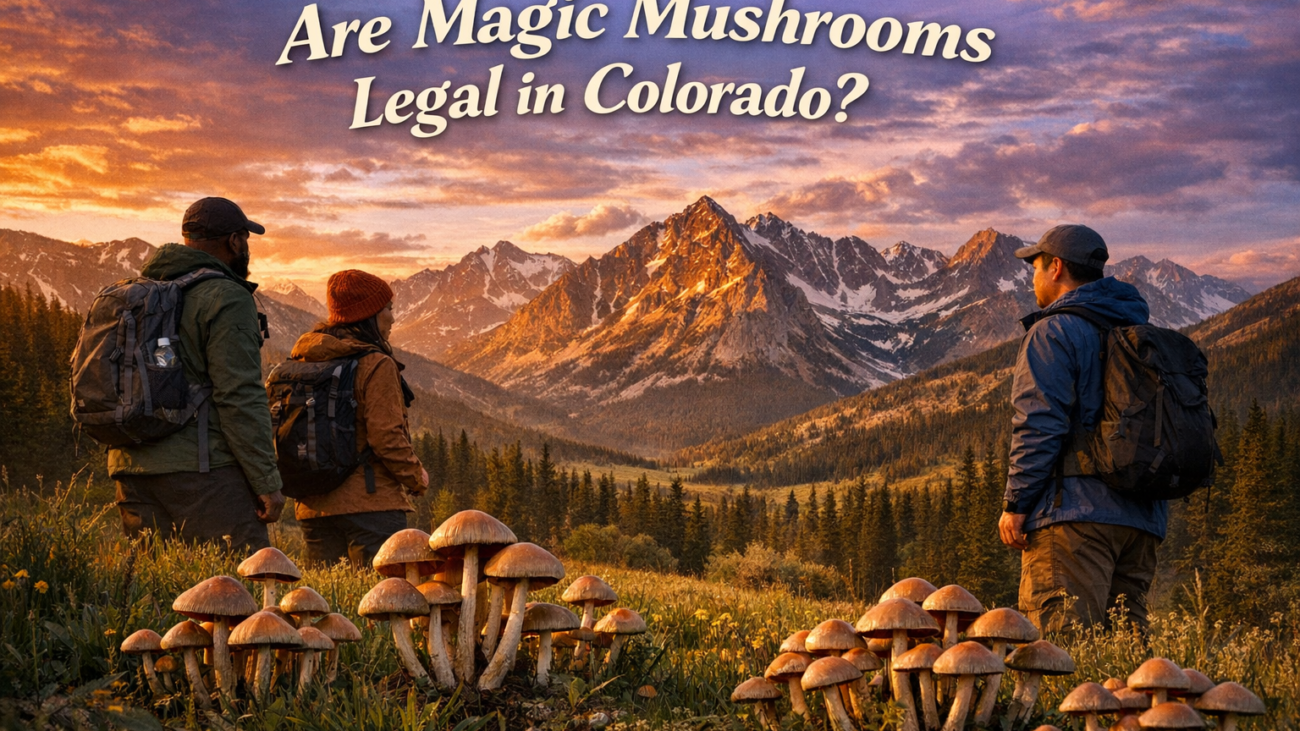
If you’ve been wondering are magic mushrooms legal in Colorado, the answer is nuanced. Since the passage of Proposition 122 in November 2022, Colorado has taken significant steps toward decriminalizing and regulating natural psychedelics, including psilocybin-containing mushrooms—commonly called magic mushrooms or shrooms. However, while personal possession and use have been decriminalized for adults 21 and over, there remain important restrictions, especially around sales and commercial distribution.
Understanding Psilocybin and Magic Mushrooms
Psilocybin mushrooms are fungi that contain the psychoactive compound psilocybin, which produces hallucinogenic effects. These mushrooms have been used recreationally, spiritually, and therapeutically. Effects may include altered perception of time, visual changes, mood elevation, and introspection. Some individuals use them for “microdosing,” taking very small amounts to enhance mood or creativity, an area that is increasingly discussed under shrooms colorado legality.
What Does Colorado Law Say About Magic Mushrooms?
Proposition 122, approved by Colorado voters, legalized the personal use, possession, cultivation, and sharing of certain natural psychedelics, including psilocybin and psilocin mushrooms, for adults 21 and older. Here’s a breakdown of what is now allowed:
Possession and Use: Adults 21+ can legally possess and consume magic mushrooms for personal use without fear of criminal penalties under state law.
Cultivation: You may grow magic mushrooms on private property, limited to a 12×12 foot area, as long as access by minors is prevented.
Sharing: Adults can share mushrooms with other adults. Selling or trading these substances, however, remains illegal.
It’s important to stress that while personal cultivation and sharing are permitted, buying or selling psilocybin mushrooms is still a felony offense under Colorado law.
What Activities Remain Illegal?
Commercial Sales: Buying or selling magic mushrooms or psilocybin products remains a serious crime with felony penalties.
Public Consumption: Using mushrooms in public places, such as parks, schools, and workplaces, is prohibited.
Federal Lands: Despite state changes, possession and use on federal land remain illegal and can result in federal charges.
Large-Scale Cultivation: Commercial growing or distribution without a license continues to be unlawful.
Possession Limits and Legal Gray Areas
As of early 2025, Colorado law does not specify an explicit limit on how much psilocybin mushroom you may possess for personal use. However, law enforcement may interpret possession of over approximately 14 grams of dried mushrooms as intent to distribute, which carries significant risks.
Because the regulatory framework is still developing, especially regarding licensed “healing centers” and facilitators, users and cultivators should proceed cautiously. The state’s Natural Medicine Division and Department of Regulatory Agencies (DORA) oversee licensing for businesses and facilitators involved in therapeutic psilocybin use.
Where Can You Get Magic Mushrooms in Colorado?
Currently, there are no legal retail dispensaries selling psilocybin mushrooms for recreational or therapeutic purposes. Access primarily comes from personal cultivation or non-commercial sharing among adults. Some businesses offer supplies like spores, substrates, and grow kits legally, helping consumers with cultivation efforts. For those searching for products, resources like magical mushrooms near me provide legal support materials.
Colorado’s Psychedelic Healing Centers and Licensing
Colorado is pioneering a licensed psilocybin therapy industry built around “healing centers” where trained facilitators guide therapeutic sessions. These centers will operate under strict state oversight but do not allow retail sales or take-home products. Licensing rules require training, experience, and adherence to safety protocols.
Unlike cannabis, psilocybin products cannot yet be sold commercially outside these licensed therapeutic settings. This model emphasizes safety, harm reduction, and controlled administration over recreational retail availability.
Legal Risks and Federal Conflict
Although Colorado law decriminalizes many personal uses of magic mushrooms, psilocybin remains listed as a Schedule I drug federally. This means:
Federal authorities could enforce possession or distribution penalties, particularly on federal property.
Banking and investment remain challenging for psilocybin-related businesses.
Transporting psilocybin across state lines is illegal and risky.
If you’re involved in cultivation, possession, or distribution activities beyond personal use, consulting with a knowledgeable attorney is advisable to understand your rights and risks fully.
How Does This Compare With Marijuana Laws?
Colorado has a history of pioneering progressive drug laws, having legalized recreational marijuana in 2012. Psilocybin legalization mirrors cannabis reform in some ways but is more limited—with no legal market sales yet and stricter regulation around commercial activity.
Still, with growing public acceptance and promising medical research on psilocybin’s therapeutic effects—especially for conditions like depression and PTSD—Colorado’s approach balances access with cautious regulation.
Additional Considerations for Cultivation and Use
Magic Mushroom Spores: Selling spores is generally legal because they do not contain psilocybin until they grow into mushrooms.
Microdosing: Taking small doses of psilocybin is personally permitted under state law, but no specific laws regulate this practice.
Safety: Always approach psychedelic use responsibly, ideally in a safe environment, and with awareness of potential psychological risks.
Further Resources
For those seeking more information on psychedelics laws or therapeutic use in Colorado, the Colorado Department of Regulatory Agencies and the Natural Medicine Division provide official guidance. Additionally, harm-reduction education is available at community organizations and through trusted online portals.
For legal supplies and related products, brands like puff boyz offer legal kits and spores that support personal cultivation within Colorado law.
Summary
To answer the question clearly: Are magic mushrooms legal in Colorado? Yes, but only for personal use, possession, cultivation, and non-commercial sharing among adults 21 or older. Selling psilocybin mushrooms or using them publicly remains illegal. The state is developing a regulated system for therapeutic use via licensed healing centers, but retail sales are not yet allowed.
Understanding psilocybin colorado law requires careful attention to the distinctions between decriminalization and full legalization. Keep informed about local regulations, and consider legal consultation if you engage beyond personal use to avoid serious penalties.
Many people wonder, are magic mushrooms addictive? The answer isn’t straightforward, but current research and expert analysis generally agree that magic mushrooms, which contain the psychedelic compound psilocybin, are not physically addictive. They don’t cause the typical withdrawal symptoms seen with substances like opioids, alcohol, or nicotine. However, psychological dependence is possible for some individuals, and problematic patterns of use can develop, especially in those seeking to escape reality or self-medicate.
What Are Magic Mushrooms?
Magic mushrooms, often called “shrooms,” are fungi that contain psilocybin and psilocin, substances responsible for their psychedelic effects. People usually consume them dried, fresh, or brewed as tea. The psychoactive effects typically start within 20 to 40 minutes and last around 4 to 6 hours. Users experience altered perception, including visual and auditory distortions, shifts in time perception, and strong emotional responses.
For those interested in the origins or cultivation, defining the nature of magic mushroom spores and the processes of growing magic mushrooms is part of understanding the broader context of their use. Reliable sources like magic mushrooms providers offer legal and safe products in areas where regulations allow.
How Do Magic Mushrooms Work?
Once ingested, psilocybin converts to psilocin in the body. Psilocin binds mainly to serotonin receptors in the brain, especially the 5-HT2A receptor, which influences mood, cognition, and perception. This interaction causes the psychedelic effects, such as hallucinations, altered thought processes, and emotional shifts.
Are Magic Mushrooms Physically Addictive?
Unlike many stimulants or depressants, magic mushrooms do not induce physical addiction. Users don’t typically experience cravings or withdrawal symptoms like sweating, shaking, or nausea when they stop using them. This is largely due to the nature of psilocybin’s interaction with brain receptors and the rapid development of tolerance, which discourages frequent consecutive use.
Can You Get Addicted to Magic Mushrooms Psychologically?
Although physical dependence is unlikely, some people can develop a psychological reliance. For example, if someone frequently uses magic mushrooms to cope with anxiety, depression, or life stressors, this habit can become problematic. Psychological addiction is characterized by:
Compulsive or preoccupied use despite negative consequences
Using mushrooms to escape emotions or reality rather than for occasional recreational or spiritual use
Craving or obsessively planning for the next use
Neglecting responsibilities or relationships due to mushroom use
Studies and clinical observations suggest that while psilocybin addiction is uncommon, the risk of developing dependency increases if mushrooms are used frequently and in high amounts.
Short-Term and Long-Term Risks of Magic Mushroom Use
Short-term effects can range from euphoria and sensory enhancement to anxiety, paranoia, nausea, and panic attacks. Some users experience “bad trips,” which involve intense fear, confusion, or disturbing hallucinations. Physically, effects such as increased heart rate, changes in blood pressure, and dilated pupils are common.
Repeated use over a short period causes rapid tolerance, meaning users must consume higher doses to achieve the same effect, which can increase risks. Long-term use may contribute to persistent psychological issues in vulnerable individuals, including:
Worsening anxiety or depression
Episodes of psychosis or schizophrenia triggered in predisposed users
Hallucinogen Persisting Perception Disorder (HPPD) – persistent visual disturbances after use
Besides mental health risks, accidental poisoning from misidentified mushrooms is a serious danger. It’s crucial to only obtain mushrooms from trusted sources, such as reputable outlets like puff boyz, especially where legality permits.
Is Using Magic Mushrooms Habit Forming?
The term “habit forming” applies more accurately to substances causing dependency. Magic mushrooms do not naturally produce a physical addiction, but habitual use does happen when an individual uses them regularly to manage emotional states or as a spiritual ritual without balance.
What Signs Indicate a Problem with Magic Mushroom Use?
Recognizing problematic use early is important. Signs include:
Using more frequently or in greater amounts than planned
Neglecting job, school, or social commitments
Continued use despite negative effects on mental or physical health
Difficulty stopping use or controlling intake
Using in dangerous situations, such as driving or operating machinery
When to Seek Help for Mushroom Use
If mushroom use causes distress or harms daily functioning, support from healthcare providers or addiction specialists may be necessary. Treatment can include individual or group therapy, addressing co-occurring mental health disorders, and developing healthy coping strategies. Dual-diagnosis care is often recommended for people who self-medicate underlying conditions like depression or anxiety with psilocybin.
Legal Status and Safety Considerations
Psilocybin is classified as a Schedule I substance under U.S. federal law, meaning it is illegal in most contexts. However, some cities and states have decriminalized or reduced enforcement related to magic mushrooms. Limited clinical research is ongoing with special permissions to evaluate psilocybin’s potential in treating depression, PTSD, and substance use disorders.
Safety depends heavily on dosage, environment, and individual mental health history. People with a personal or family history of psychosis, schizophrenia, or bipolar disorder should avoid using magic mushrooms.
Many people wonder, are magic mushrooms addictive? Magic mushrooms, also known as psilocybin mushrooms or simply shrooms, contain the psychoactive compound psilocybin. This substance produces hallucinogenic effects that can alter perception, mood, and cognition. Unlike substances such as alcohol or opioids, magic mushrooms are generally not considered physically addictive. However, understanding whether they can lead to dependency or problematic use requires a closer look at how they work, their effects, and associated risks.
What Are Magic Mushrooms?
Magic mushrooms are fungi that naturally contain psilocybin, which the body converts to psilocin to affect serotonin receptors in the brain. These mushrooms have a long history of ceremonial, spiritual, and medicinal use across various cultures around the world. Today, they are often consumed recreationally or informally by people looking for mental health benefits, though scientific research on their therapeutic potential is ongoing.
They can be eaten fresh or dried, brewed into tea, or ingested in capsules. Common street names include shrooms, mushies, or boomers.
How Do Magic Mushrooms Work?
Once ingested, psilocybin acts primarily on the serotonin 2A receptors in the brain, leading to changes in sensory perception and thought patterns. Effects usually begin within 20 to 40 minutes and last between 4 and 6 hours. Users commonly experience:
Visual and auditory hallucinations
Altered sense of time and space
Emotional highs ranging from euphoria to anxiety
Spiritual or mystical experiences
Physical effects like nausea, increased heart rate, and dilated pupils
Are Magic Mushrooms Physically Addictive?
Unlike substances known for physical addiction, psilocybin mushrooms do not cause withdrawal symptoms or physical cravings when stopped. Research shows that the body quickly builds tolerance to psilocybin, meaning repeated use over a short period reduces its effects. This rapid tolerance discourages frequent use, making physical dependence unlikely.
Can You Get Psychologically Addicted to Magic Mushrooms?
While physical addiction is rare, some individuals may develop a psychological dependence. This happens when people begin to rely on the substance to cope with emotions, relieve stress, or escape reality. Such patterns can lead to compulsive use despite negative personal or social consequences, a condition sometimes referred to as hallucinogen use disorder.
Signs of problematic use include:
Persistent cravings or obsessive thoughts about shrooms
Using shrooms despite mental health or legal problems
Neglecting responsibilities or relationships
Taking risks such as driving while under the influence
Spending excessive time or money seeking the drug
Risks and Dangers of Magic Mushrooms
Even though they are not physically addictive, magic mushrooms carry important risks. Psychological effects can range from joyous experiences to severe anxiety, paranoia, or terrifying hallucinations, often called a “bad trip.” Some users may experience flashbacks or persistent perceptual disturbances after use.
There is also a potential danger if mushrooms are misidentified and toxic varieties are ingested, which can cause serious harm or death. Furthermore, individuals with a personal or family history of psychosis or schizophrenia face higher risks of triggering severe mental health episodes.
Treatment for Problematic Mushroom Use
For those who struggle with mushroom dependency or hallucinogen use disorder, treatment often involves behavioral therapies such as cognitive-behavioral therapy (CBT) or motivational interviewing. Addressing any co-occurring mental health conditions is vital for recovery.
If you or someone you know experiences compulsive mushroom use or related harms, seeking professional help is recommended. Treatment programs can be inpatient or outpatient depending on severity and co-substance use.
Final Thoughts
In summary, are magic mushrooms addictive? They are not considered physically addictive, and physical dependence is rare. However, psychological dependence and problematic use can occur, particularly if mushrooms are used frequently to relieve emotional distress or avoid challenges.
Understanding these nuances can help users stay informed and cautious, especially considering ongoing research on their medical applications. For those interested in learning more about sourcing legal or safe magic mushrooms, reputable sources such as magic mushrooms vendors exist, but always prioritize safety and legality.
People ask for a “simple recipe” for magic mushroom tea because tea feels gentler than chewing dried mushrooms, and it can be easier on the stomach. I can’t provide step-by-step instructions for preparing or consuming illegal drugs. What I can do is explain what mushroom tea is, why people choose it, what goes wrong, and how to reduce risk if someone is determined to use psychedelics where they’re legal and medically appropriate.
First, a quick reality check on legality and safety
Psilocybin mushrooms are illegal in many places, and laws vary even within the same country. Some areas have decriminalized possession, some allow supervised clinical use, and many still treat it as a criminal offense. If you’re unsure, check your local rules before doing anything.
From a safety angle, psilocybin can amplify mood and perception, which is why “set and setting” matters. It can also raise heart rate, trigger nausea, and in some people bring on panic, paranoia, or lingering anxiety. If you have a personal or family history of psychosis or bipolar disorder, psychedelics can be especially risky. Mixing psychedelics with alcohol or other drugs increases unpredictability.
What magic mushroom tea is (and what it isn’t)
“Mushroom tea” can mean two different things: • Functional mushroom drinks made from reishi, lion’s mane, cordyceps, and similar non-psychoactive mushrooms. • Psilocybin mushroom tea made from psychedelic mushrooms.
The second type is the one people mean when they say “magic mushroom tea.” The idea is to separate the active compounds into a hot beverage so you’re not eating as much fibrous mushroom material. Many users often report faster onset compared to eating whole pieces and sometimes less stomach discomfort. That said, “tea” doesn’t guarantee a smoother session; it’s still psilocybin.
Timing: when effects start and how long they can last
Most people feel the first effects within about half an hour, sometimes sooner, sometimes later. Duration commonly lands around several hours, with a gradual taper. Your body, the amount used, whether you’ve eaten, and your mindset can shift the timeline a lot. If you’re trying to plan your day, the safest assumption is that you’ll be unavailable for the rest of the day, with aftereffects like fatigue or sensitivity that can linger into the evening.
Why people choose tea instead of eating dried mushrooms
It can be easier on the stomach
A big reason is nausea. Dried mushrooms can be tough to digest. Tea may reduce the amount of solid material that hits your gut, which can help some people.
It can feel faster
Many report that tea hits quicker. That can be convenient, but it can also feel intense if you’re not prepared, because the ramp-up can be steeper.
Flavor can be more manageable
Honestly, mushrooms taste like mushrooms. Tea lets people use other flavors to cover the funk, though it won’t erase it completely.
The common mistakes people make with “shroom tea”
Even without a recipe, it’s useful to know what typically goes wrong.
Mistake 1: Treating puff-count math like dosing math
With vapes, people talk about puffs. With mushrooms, potency varies wildly by species, grow, storage, and age. Two batches that look similar can feel totally different. Assuming a fixed “one mug equals X” is how people get surprised.
Mistake 2: Using boiling-hot liquid and blaming “the tea” when it feels weak
High heat and long exposure can degrade compounds in many botanicals. People often make tea too hot, too long, then say it “didn’t work,” and take more. Stacking more on top is a common path to an overwhelming trip. If someone is in a jurisdiction where use is legal, they should follow reputable, harm-reduction guidance rather than guessing.
Mistake 3: Chugging fast, then getting anxious when it comes on strong
Tea is easy to drink quickly. A faster come-up can feel like losing control, which feeds panic. Slow, mindful pacing is safer than slamming a cup and waiting for the floor to move.
Mistake 4: Not straining well, then thinking tea “doesn’t count”
People sometimes leave a lot of material in the drink, swallow it, and then forget they effectively ate mushrooms too. That can increase nausea and intensity.
Mistake 5: Mixing with alcohol, weed, or stimulants
Some people try to “take the edge off” with alcohol or combine it with cannabis to boost visuals. For many, that increases confusion and anxiety. Stimulants can raise heart rate and jitteriness. If your goal is a predictable session, mixing is the opposite.
Mistake 6: Using random online “detox” advice instead of basic planning
Threads are full of risky suggestions, from extreme water loading to questionable products. Overhydration can be dangerous. The smarter move is planning: don’t schedule responsibilities, avoid driving, and keep a calm space.
Practical safer-use tips (not a how-to)
This isn’t permission or encouragement; it’s harm reduction.
Choose the right day and place
Pick a low-stress day, with no work, no driving, and no important calls. A familiar, comfortable setting is better than a crowded public scene.
Have a sober, trusted sitter if you’re unsure
A friend who stays sober can help with reassurance, hydration reminders, and preventing risky decisions.
Start low and wait
Taking more too soon is one of the top causes of a bad time. Waiting is boring, but it’s safer than stacking.
Keep hydration simple
Sip water normally. Avoid extreme strategies. Eat light if you’re prone to nausea.
Protect sleep and the next day
Have food ready, dim lighting, and a plan to rest. Many people feel emotionally tender afterward; give yourself space.
Storage, freshness, and why “old shrooms” can surprise you
How mushrooms are stored affects potency. Heat, moisture, and sunlight can damage active compounds and increase the chance of mold. If something smells musty, looks fuzzy, or feels damp, don’t use it. Older material can be uneven: one piece feels mild, another hits harder than expected. That unevenness is one reason people get caught off guard.
Medication and health interactions people forget about
If you take psychiatric meds, don’t assume mushrooms are “natural so it’s fine.” Some antidepressants can blunt effects, and mixing psychedelics with certain substances can raise risk. If you have heart issues, uncontrolled anxiety, or you’re pregnant or breastfeeding, skipping psychedelics is the safer call. If you’re considering any use for mental health, the safest route is medical screening and supervised care.
When to stop and seek help
If someone has chest pain, trouble breathing, severe confusion, suicidal thoughts, or dangerous behavior, that’s a medical situation. If panic is intense, grounding helps: slow breathing, a quiet room, and reassurance that it will pass. If symptoms don’t settle or safety is at risk, call emergency services.
Functional mushroom tea is a different category
If your goal is daily wellness, consider non-psychoactive mushroom blends like reishi, lion’s mane, or cordyceps. Many brands market them for stress support or focus, and they’re typically caffeine-free. Just be clear about labels: functional mushroom powders are not psilocybin.
FAQs
Is tea stronger than eating mushrooms?
Not necessarily. It can feel faster, which feels stronger, but the total effect depends on potency and amount.
Why does magic mushroom tea sometimes feel gentler?
Often because less solid material is consumed, which may reduce stomach discomfort for some.
Can you “fix” a bad batch by changing the tea?
Changing prep won’t fix unknown potency or contamination. Source and testing matter more than tricks.
What’s the safest option if you’re curious?
The safest route is legal, supervised use in a clinical or facilitated setting where available.
Final thoughts
People like mushroom tea because it can be easier to drink than to chew, and it may be gentler on the stomach. But the biggest risks usually come from guesswork: unknown potency, rushing the timeline, and mixing substances. If you want the lowest-risk path, keep it legal, keep it simple, and treat it with respect.
Magic mushrooms (psilocybin mushrooms) are psychedelic fungi known for their hallucinogenic effects. People consume them in various forms – from dried caps and teas to chocolate edibles and even magic mushroom gummies – for recreational trips, spiritual exploration, or microdosing for potential mental health benefits. Because psilocybin (the active compound in magic mushrooms) is a controlled substance in most countries, users often worry about drug testing. Failing a drug test can carry serious consequences, including job loss, reputational damage, or legal trouble . This raises the key question: do standard drug tests detect psilocybin from magic mushrooms?
In short:Most routine drug screens do not check for psilocybin, so magic mushrooms usually won’t show up on a standard test . However, specialized tests can detect psilocybin/psilocin if specifically targeted, though these are uncommon except in particular situations . Below, we delve into the details with evidence-based answers to common questions about magic mushrooms, drug testing methods, detection windows, and related factors.
What Types of Drug Tests Are Used, and Can They Detect Magic Mushrooms?
Drug testing can involve urine, blood, saliva, hair, or even fingernails – but psilocybin rarely appears in standard panels. The typical workplace or probation drug screen is a 5-panel or 10-panel urine test focusing on common drugs of abuse (like marijuana/THC, cocaine, opiates, amphetamines, and PCP) . Psychedelic substances such as psilocybin (from magic mushrooms) are not included in these standard panels . For example, a standard 5-panel test covers: THC, cocaine, opiates, amphetamines, and PCP . Expanded 10-panel tests add drugs like barbiturates, benzodiazepines, methadone, etc., but still do not target psilocybin . In other words, if you take magic mushrooms, a routine employer’s drug test is unlikely to detect it.
That said, there are specific drug tests that can detect psilocybin and its metabolite psilocin – they just aren’t used often. These include specialized urine tests, blood tests, hair follicle tests, saliva tests, or even nail clippings that are designed to screen for hallucinogens . Such tests must be explicitly ordered (for instance, in a forensic investigation or court case) because they’re not part of the regular testing menu. Even law enforcement and medical toxicology labs don’t typically include psilocybin in a general drug screen unless there’s a particular reason to suspect its use . In summary, urine is the most common sample for drug testing, but a standard urine screen won’t flag magic mushrooms – only a tailored test would . The same goes for blood and saliva: they can reveal psilocybin use for a brief time, but only if a specific hallucinogen test is done. Hair and nail tests have the longest detection windows for drugs and can retain traces of substances for months; labs can analyze them for psilocybin, though this is rarely performed due to cost and necessity .
Evidence: Multiple medical sources confirm that magic mushrooms are absent from standard drug panels . For example, Drugs.com notes that routine 5- or 10-panel tests “do not screen for psilocybin or its metabolite” and focus instead on other drugs . Likewise, Medical News Today reports that “drug tests do not usually look for shrooms… in common purposes such as screening job applicants” . Special hallucinogen test panels (notably uncommon) would be required to detect psilocybin or similar psychedelics .
How Do Drug Screening Panels Work, and Why Don’t They Include Psilocybin?
Most drug tests use immunoassay screens targeting specific drug metabolites, followed by confirmatory lab analysis – and psilocybin simply isn’t on the target list in routine screens. In an immunoassay, antibodies react to metabolites of certain drugs; standard tests are configured for the substances most associated with abuse or safety risks (like opioids, amphetamines, etc.). Psilocybin and psilocin have a unique chemical structure that typical immunoassays do not pick up . Unless the test kit specifically includes reagents for psilocin, a magic mushroom user’s sample will register “clean” on those panels.
If an initial screen does flag something, laboratories use confirmatory testing (usually GC-MS or LC-MS, advanced chromatography/mass-spectrometry techniques) to verify the exact compounds present. Confirmatory tests can detect psilocybin – but they are only done if someone asks to look for it, or if a broad toxicology analysis is underway. Simply put, psilocybin isn’t included in routine panels because it’s not among the top drugs of concern in workplace testing programs. Employers and regulators historically focused on drugs with high abuse potential impacting safety and productivity (e.g., opiates or alcohol). Hallucinogens like LSD or psilocybin are used less frequently, metabolize quickly, and are not seen as drugs that cause on-the-job impairment in the same way alcohol or opioids do. Thus, standard tests “ignore” psilocybin by design .
Another reason is practicality: adding a panel for every possible substance (including psychedelics) would make routine testing very expensive and complex. It’s not cost-effective to test everyone for psilocybin when positive usage rates are low and the detection window is short. For instance, the U.S. federal workplace testing guidelines (SAMHSA) stick to a set list of drug categories for urine tests (marijuana, cocaine, amphetamines, opiates, PCP, etc.) . Federally regulated programs in the U.S. only test urine for those standard drugs, and do not routinely use hair or blood for employee drug screens – meaning psychedelics seldom enter the equation. Other countries have similar approaches; for example, in the UK, standard employment drug tests or roadside tests do not check for psilocybin either, unless police order a specialized test in an investigation.
Bottom line:Psilocybin isn’t part of the default drug test panel. Only if a test is specifically expanded or tailored (using lab analytics beyond the basic immunoassay) would it detect magic mushroom use. This explains why a person could take magic mushrooms – even on the weekend before a Monday workplace test – and typically pass the standard urine screen, because that test isn’t “looking” for that drug.
Will Psilocybin (Magic Mushrooms) Show Up on a Standard Drug Test?
**No – standard 5-panel and 10-panel drug tests do not detect psilocybin or psilocin. As noted, these common tests target a fixed set of drugs and magic mushrooms are not on that list . If you only consumed psilocybin mushrooms and no other substances, a typical employment or probation drug test is extremely unlikely to come back positive. In fact, experts often state that the chance of “popping positive” for shrooms on a routine test is practically zero in normal circumstances . The only caveat would be if the mushrooms were adulterated or misidentified as another drug in testing (more on false positives later).
However, special-order tests can show psilocybin use. For example, a probation officer or court might specifically request a hallucinogen panel if they suspect someone is using psychedelics. These specialized tests could be urine or blood tests sent to a lab that has the capability to measure psilocin. If such a targeted test is used within the detection window, psilocybin use will show up. This scenario is rare outside of certain contexts – more likely in a legal case, specialized treatment program, or research study than in a routine job screen. One niche example is the United States military: as of late 2025, the U.S. Department of Defense expanded its drug testing program to include psilocin (the active psilocybin metabolite) for service members . This policy change means that in the military (and only there, for now), random drug tests may now detect magic mushroom use, whereas previously they did not. The military’s decision underscores how unusual it is to test for psilocybin – it’s newsworthy that they’re starting to do so, reflecting increased awareness of psychedelic use.
Evidence: A Drugs.com medically-reviewed answer states unequivocally: “shrooms will not typically show up on a standard 5-panel or 10-panel drug test” . Similarly, a rehab education resource notes that common five-, eight-, or twelve-panel tests do not screen for psilocybin at all . Only dedicated lab tests can find it. So for standard workplace drug screens, the consensus is that magic mushrooms are essentially invisible.
How Long Do Magic Mushrooms Stay Detectable in Your System?
If a specialized test is used, the detection window for psilocybin is generally very short – often only 24 hours or less in bodily fluids, but much longer in hair. Psilocybin is rapidly metabolized into psilocin, which the body clears quickly. Here’s a breakdown by test type:
Urine: Psilocin appears in urine shortly after ingestion and is typically undetectable after about 24 hours for most users . Some sources give a range up to 24-48 hours just to be safe. Heavy or chronic mushroom users (uncommon, given how infrequently most people take psychedelics) might retain trace metabolites slightly longer (perhaps up to 3 days), but that’s considered rare . One forensic source notes the detection window is “usually less than one day,” extending to 1–3 days only in unusual cases of very frequent use . In practice, after 48 hours, it’s highly unlikely any psilocybin will be found in urine.
Blood: Psilocybin/psilocin can be found in blood for only a few hours, up to 12-24 hours at most . Blood concentrations peak quickly during the trip and decline as the compound is metabolized. A review in Addiction Medicine suggested psilocin is barely detectable 6 hours after ingestion . Generally, if more than a day has passed, a blood test will not pick up any psilocybin use. Because of this short window, blood tests for mushrooms are only useful immediately after use – for instance, if someone is hospitalized or arrested while actively under the influence.
Saliva: There is limited data, but psilocybin likely mirrors blood in saliva. Detection is probably only for a few hours, up to a day at most . Saliva tests for drugs are more common for things like cannabis or alcohol (and even those are short-lived). Psilocybin could be theoretically detected in saliva shortly after dosing, but the body breaks it down so fast that unless a saliva test is taken within the same day of use, it would likely be clear. Routine saliva drug tests (like roadside DUI tests) do not include psilocybin either.
Hair: Hair follicles provide the longest detection window. After ingesting magic mushrooms, some drug molecules get deposited in growing hair strands. Hair tests can potentially detect psilocybin use for up to 90 days (about 3 months) . In fact, a standard 1.5-inch hair sample is often said to represent ~90 days of drug history. However, it can take a couple of weeks after ingestion for the drug to actually become incorporated in hair that can be cut and tested . Hair testing for psilocybin is very uncommon due to its expense and the need for a specialized lab, but it is used in some forensic or lengthy monitoring situations. If someone had to undergo a hair drug test (say, for a court case), any mushroom use in the past few months could potentially be uncovered.
Fingernails: This is an even more specialized test. Like hair, fingernails can trap drug metabolites as they grow. A nail clipping can reveal drug use for up to about 6 months prior . Psilocin gets incorporated into the keratin of nails similarly to hair . Nail testing is rare and usually reserved for forensic purposes, but it’s technically possible.
To summarize detection times: psilocybin is usually out of your blood and saliva within hours, out of urine within a day or so, but detectable in hair or nails for months. The quick elimination in urine/blood is why standard drug tests (which typically check urine) are unlikely to catch mushroom use – one would have to test very soon after ingestion, and even then only with a targeted test. For instance, the American Substance Abuse Professionals organization notes psilocin “may not be detectable in urine after 24 hours” and in blood after about a day, even though it can be found in hair for 90 days .
Evidence: Authoritative sources consistently describe short detection windows for psilocybin in bodily fluids. Healthline reports that most people eliminate shrooms within 24 hours, making them undetectable by urine tests after a day . The U.S. military’s guidance similarly cites that psilocybin compounds “leave the body relatively quickly” – often gone from urine by 24 hours and from blood within 24 hours . By contrast, hair tests can “detect these compounds for as long as 90 days” . This stark contrast highlights why only very timely or specialized testing will catch magic mushrooms.
What Factors Affect How Long Psilocybin Is Detectable?
Several personal and usage factors can influence detection times for magic mushrooms:
Dose Consumed:Higher doses of psilocybin mean more of the substance for your body to process, which can take longer. A large dose might be detectable slightly longer than a microdose, simply because there’s more psilocin for the body to clear . However, even with a high dose, we’re talking differences of hours, not weeks – psilocybin still clears quickly compared to many other drugs.
Frequency of Use: If someone uses magic mushrooms very frequently, metabolites could accumulate a bit. A rare scenario would be a person microdosing daily or frequently tripping. Chronic use might extend the urine detection window from ~24 hours to a few days because the body is constantly processing new intake . Still, chronic psilocybin use is not common (most users take days or weeks between trips due to tolerance and the nature of the experience).
Mushroom Potency & Species: Different mushroom strains (or products like magic mushroom gummies or chocolates) have varying amounts of psilocybin. Stronger mushrooms (or a potent extract) deliver more psilocybin, potentially lingering slightly longer in the system . There are over 180 species of psilocybin-containing fungi ; a more potent species could mean a longer detectability window than a milder one for the same physical amount ingested.
Method of Ingestion:How you consume the mushrooms matters. Eating dried mushrooms vs. drinking mushroom tea vs. taking a microdosing mushroom gummy can affect absorption. For example, mushrooms brewed in tea or lemon tek are absorbed faster (and may also be eliminated slightly faster) than whole mushrooms that need full digestion . Faster absorption might mean a higher initial level of drug that clears quicker, whereas slower digestion could extend how long psilocin trickles into your system.
Metabolism & Body Chemistry:Individual metabolism rate plays a big role. People with faster metabolisms (due to genetics, exercise, etc.) may clear psilocybin more quickly . Body composition can also factor in – there is evidence that a small amount of psilocybin/psilocin can be temporarily stored in fat tissues before final excretion . If someone has a higher body fat percentage, theoretically a bit more of the drug could linger in fat and release slowly (one source suggests ~15-20% of the dose might be released over a few days from fat stores) . Age and organ function are relevant too: older individuals or those with liver/kidney impairments may metabolize and eliminate drugs more slowly .
Hydration and Body Fluid pH: Being well-hydrated can marginally help your body excrete substances faster. Drinking water may slightly speed up the urinary elimination of psilocin . But this has limited impact – it might make a difference of a few hours at best. It’s not a reliable way to beat a drug test (especially since psilocybin is gone so quickly regardless). Still, dehydration vs. hydration could tilt the window a little.
Food Intake: Having a full stomach when you take mushrooms can slow absorption. If you ate a big meal along with those magic mushroom gummies, it might take longer for psilocybin to be absorbed and processed, which could in theory extend how long it remains detectable by a small amount . Conversely, taking shrooms on an empty stomach might lead to faster metabolism and clearance.
In practical terms, these factors don’t dramatically extend detection beyond the general ranges given. They explain individual variability (why one person might clear in 12 hours vs another in 24 hours), but even the slowest metabolizer won’t carry psilocybin in urine much beyond a couple of days. The main takeaway is that detection is fast for everyone; factors just fine-tune how fast.
Evidence: Healthline details many of the above factors – noting dose, mushroom species/potency, and individual metabolism as key variables in how long shrooms hang around . The DNA Legal guide also lists factors like amount consumed, time since consumption, overall health, hydration, metabolism, and ongoing use as influencing detection, while emphasizing the drug’s rapid clearance makes it “tricky” to detect unless conditions are just right . A review in Recovered points out research showing large differences in individual metabolism rates for psilocybin, reinforcing that each body is different in processing the drug .
In What Situations Might You Be Tested Specifically for Magic Mushrooms?
Although most employers and standard tests don’t target psilocybin, there are specific scenarios where a person could indeed be tested for magic mushrooms:
Court-Ordered or Probation Testing: If someone is on probation, parole, or involved in a court case (such as a child custody dispute or DUI involving suspected drug use), authorities might include psilocybin in the testing panel if there’s reason to suspect use. For example, in a case where an individual is known to use psychedelics or was arrested for mushroom possession, a judge could order periodic tests for psilocin . These would be specialized lab tests done through probation services or private labs. Courts have the discretion to test for any illicit substance as needed.
Law Enforcement and Emergency Room Toxicology: If you are pulled over and appear intoxicated or involved in an accident, police typically administer standard DUI tests (which check alcohol or common drugs). Mushrooms won’t show on those roadside kits. However, a Drug Recognition Expert (DRE) officer who suspects a hallucinogen might request a blood draw and toxicology screen. Similarly, in a hospital emergency room, if a patient is exhibiting psychedelic effects, the doctors might run a broad toxicology test. In these cases, a forensic toxicology lab could identify psilocybin/psilocin in blood or urine, but the test must be specifically tailored to do so . These situations are rare and usually only when someone is acutely intoxicated and the cause is unknown.
Military and Security Clearance: As mentioned, the U.S. military is now adding psilocin to its random testing panel for service members . Military personnel are subject to stricter testing protocols. This policy (effective October 2025) means active duty members could be randomly tested for magic mushrooms, especially if there’s probable cause (e.g., an incident or self-admission). Outside the military, certain federal jobs or high-level security clearance positions might also require more extensive drug screenings. While routine federal job drug tests still focus on the standard five, agencies could theoretically include a hallucinogen screen for top-secret clearance applicants or similar, if there was concern about any drug use. Such instances would be highly case-by-case.
Clinical Trials or Treatment Programs: With the resurgence of psychedelic research, someone participating in a clinical trial involving psilocybin might be tested to confirm they took (or did not take) the substance as part of the study. Conversely, a substance abuse treatment program might test participants for all drugs including psychedelics to ensure compliance. These are specialized contexts where testing for psilocybin makes sense scientifically or therapeutically.
Workplace (Unusual Cases): The average employer sticks to standard panels. However, in industries where safety is critical (aviation, transportation, etc.), companies sometimes use very comprehensive drug tests. A “15-panel” or custom panel could, in theory, include psychedelics, although it’s not common. Some anecdotal reports suggest certain private companies have tested for LSD or mushrooms if there was a specific incident. Also, internationally, different countries or companies have different policies – for example, in some countries with zero-tolerance drug policies, an employer might request a broad toxicology screen after an accident, which could reveal psilocybin. But generally, employers don’t pay for expensive tests without cause. Most routine employment drug testing programs do not target magic mushrooms .
In summary, you’d typically only face a mushroom-specific drug test in special situations: legal orders, military service, or if specifically suspected by authorities. The ordinary citizen taking shrooms on occasion is very unlikely to be tested for them. It’s worth noting too that in places where psilocybin has been decriminalized (like certain U.S. cities, or Oregon/Colorado at the state level), testing for mushrooms might become even less of a priority for employers or authorities – though federal law still prohibits it. Conversely, even in those jurisdictions, if you’re in a federal role (like military or DOT-regulated job), the federal rules (which ban psilocybin outright) apply.
Evidence: The DNA Legal guide (UK-based) explains that specialized tests for psilocin can be requested in legal scenarios, citing examples like child custody disputes or incidents involving public intoxication where mushroom use is suspected . Recent news shows the Pentagon’s new policy enabling testing of service members for psilocybin due to concerns about readiness and discipline . This indicates that while uncommon, certain authorities are starting to keep an eye on psychedelic use. On the other hand, Drugs.com notes that routine workplace or probation screenings will not detect magic mushrooms – it takes a court-ordered or forensic test to do so . Employers generally focus on more prevalent substances.
Can Magic Mushrooms Cause False Positives on Standard Drug Tests?
One common worry is whether taking magic mushrooms could trigger a false positive for some other drug on a standard test. The good news: psilocybin is chemically distinct enough that it’s highly unlikely to cause false positives for other substances. Standard immunoassays target specific metabolites; psilocin’s structure doesn’t closely mimic the metabolites of drugs like amphetamines or opioids, for example. Thus, consuming psilocybin should not accidentally trip the test for, say, PCP or any of the usual panel drugs. An authoritative source confirms that false positives for psilocybin are rare on standard tests . In immunoassay terms, cross-reactivity is minimal.
There is an exception to note: some hallucinogen tests might cross-react. For instance, a very unspecific test (not common nowadays) could potentially confuse psilocin with a similar indole like LSD. The Pentagon memo we discussed mentioned that any false positive would likely be due to “cross-reactivity with another hallucinogen, such as LSD” . This implies that if a cheap test strip were designed to detect any hallucinogen, it might not distinguish between LSD and psilocybin. However, confirmatory GC-MS testing would easily tell them apart. For all practical purposes, standard drug panels don’t even look at the chemical range where psilocybin would register, so false positives on those panels don’t occur.
A different kind of “false positive” scenario involves contaminated drug samples or products. This isn’t a false positive in the test mechanism, but from the user’s perspective it’s unexpected. For example, if someone took what they thought were pure magic mushrooms, but those mushrooms were laced with another drug (say PCP or an amphetamine), then a standard test could come up positive – for the other drug. There have been reports of unscrupulous vendors selling mushroom products (like “psychedelic mushroom gummies”) that actually contained LSD or research chemicals to enhance effects . In one CDC investigation, gummies marketed as legal Amanita muscaria mushroom supplements were found to contain unlabeled psilocybin and even traces of other drugs like kratom and ephedrine . If you consumed such a product, you could indeed fail a drug test – not because of the psilocybin (which wouldn’t show on a standard test) but because of the other adulterants (e.g., ephedrine could show up as an amphetamine). Even pure psilocybin mushrooms might carry surface contamination; for instance, if someone sprayed mushrooms with an LSD solution (a rare, hypothetical scenario) and you ate them, you could test positive for LSD. These cases are extremely uncommon but worth mentioning: the only realistic way shrooms cause a “positive” on a typical drug test is if they were spiked with a drug that is on the panel .
Key point: Magic mushrooms themselves won’t trigger false positives for other drugs in any usual scenario. Always confirm unexpected positives with a lab – confirmatory tests will clarify what substance is present.
Evidence: Drug treatment experts note that cross-reactivity with psilocybin is minimal. The U.S. military’s brief on their new testing policy explicitly says “False positives are rare” with psilocybin tests . Additionally, Drugs.com’s FAQ explains that “pop-up” detection (i.e. accidental detection) of psilocybin on standard tests is unlikely, and while false positives can happen, it’s mostly a theoretical concern with very unspecific tests . As a safeguard, any initial positive in a professional setting would be confirmed with GC-MS, which would correctly identify whether psilocybin or something else was present. The wisdom from experienced users (even on forums like Reddit) concurs: the only way mushrooms make you fail a standard test is if what you took wasn’t just mushrooms .
Legal and Employment Considerations of Magic Mushrooms and Drug Testing
Legally, psilocybin (the compound in magic mushrooms) is classified as an illicit substance in most parts of the world, but drug testing policies haven’t caught up to test for it routinely. In the United States, psilocybin is a Schedule I controlled substance federally, meaning it’s illegal to possess or use outside of approved research. Similarly, in the UK it’s a Class A drug, carrying severe penalties for possession or supply . Despite this strict legal status, employers typically do not test for psilocybin because, as discussed, standard tests omit it . They focus on drugs that are both illegal and commonly abused in ways that affect the workplace (like opioids or cocaine). Magic mushrooms, used infrequently and with rapid clearance, have largely flown under the radar in employment drug screening.
That said, the consequences if you somehow do test positive for psilocybin can be serious. If you are in a scenario where a specialized test is administered (probation, military, etc.) and you fail, it could lead to legal violations, loss of job or benefits, or other penalties just as a positive for any other illicit drug would. For example, someone on probation who tests positive for psilocin could face revocation of probation. A soldier who pops positive under the new DoD testing will likely face disciplinary action. Employers generally don’t care to test for it, but if an employer became aware of your mushroom use (through a confession or an observed incident), they might still act on it (since it’s illegal use). Always remember that decriminalization in certain localities (like some U.S. cities, or states like Oregon and Colorado that have moved to ease penalties or allow therapeutic use) does not protect you from federal law or private employers’ policies. For instance, Colorado may not prosecute you for possessing mushrooms, but a federal employer or a private company with a drug-free policy could still fire you if a test somehow revealed psilocybin use.
International perspectives: In a few countries, psilocybin has a more tolerant legal status. The Netherlands famously allows psilocybin truffles to be sold legally, and Jamaica has no laws against mushroom use. Some countries in South America (like Brazil) don’t outlaw the mushrooms themselves due to legal loopholes, and as of 2023, Australia permits psychiatrists to prescribe psilocybin in controlled therapy settings. However, even in these places, workplace drug testing for mushrooms is virtually unheard of. The focus remains on more prevalent drugs. In contrast, countries with very strict drug enforcement (some Asian and Middle Eastern countries) typically use narrow panels similar to the U.S. ones – not testing for psilocybin routinely, but if you were suspected of any drug use, the legal consequences could be severe. The bottom line is: don’t expect leniency just because it’s “only shrooms”; but also know that routine tests aren’t designed to catch you.
Another consideration is the availability of magic mushroom products like spores and grow kits. Many places legally sell magic mushroom spores or cultivation kits (since spores contain no psilocybin until grown). Owning spores or kits might be legal, but growing them into mushrooms or buying dried mushrooms is not. From a testing standpoint, simply possessing spores or being around mushrooms won’t make you fail a test – you have to ingest them for psilocin to appear in your system. So one could legally buy spores in some jurisdictions and still pass any drug test as long as they haven’t actually consumed psilocybin. Of course, once you cultivate and ingest, the legal protection evaporates and you could, in theory, be tested if authorities had cause.
With the ongoing shifts in psychedelic laws (for example, local decriminalization initiatives and clinical trials for therapy), it’s possible in the future that more employers or agencies will consider adding psilocybin to testing panels. But given the expense and short detection window, it may remain a low priority except in contexts where usage is directly pertinent (e.g., military safety, therapy compliance).
Key advice: If you are subject to any program or job that explicitly bans all illegal substances, assume that any drug use is a risk. While the probability of being tested for mushrooms is low, it’s not zero. And if you’re in a field where specialized testing happens (aviation, nuclear, law enforcement), exercise caution. For most people, though, magic mushrooms are out-of-sight, out-of-mind as far as routine drug tests are concerned .
Evidence: Employers “generally focus their drug testing on substances more commonly associated with workplace impairment,” notes the Drugs.com guide, explicitly stating that most employer tests do not include mushrooms . This is reflected in real-world policy; for example, U.S. federal workplace tests (SAMHSA guidelines) do not list psilocybin at all . On the legal side, the military.com article highlighted that despite some U.S. states decriminalizing mushrooms, they remain illegal federally and thus the Pentagon cites them as a threat to readiness, prompting testing . In the UK, magic mushrooms’ Class A status means possession can technically lead to imprisonment , but standard workplace drug testing in the UK still mirrors the U.S. in focusing on other drugs – psilocybin isn’t included unless a bespoke test is commissioned. Always be mindful of the specific rules of your jurisdiction and situation.
Scientific Studies and Expert Opinions on Psilocybin Drug Testing
Toxicologists and researchers have studied psilocybin’s metabolism and detection, offering insights that reinforce why it’s hard to catch on tests:
Metabolism Speed: Scientific studies show psilocybin is converted to psilocin quickly, and then eliminated. The half-life of psilocin in the human body is on the order of 1.5 to 3 hours . One review found about 75% of psilocin is excreted within the first 3.5 hours after ingestion . This aligns with the idea that within a day, it’s essentially all gone. Another paper noted psilocybin itself (before conversion) has a half-life around 2.5 hours, meaning it doesn’t linger either . These pharmacokinetic facts explain the short detection windows. A 2021 scientific review summarized that psilocybin is “barely detectable after 6 hours” post-use in most testing .
Detection Techniques: Researchers in forensic toxicology have developed methods to detect psilocin in body fluids and tissues. Gas chromatography-mass spectrometry (GC-MS) and liquid chromatography-tandem MS are capable of identifying psilocin at very low levels for a brief period. However, those methods are typically used in postmortem exams or special case testing, not routine screens. One study cited by Medical News Today pointed out that sensitive tests could find psilocin in urine for only up to 6-24 hours depending on the cut-off, underscoring how fast it disappears . In contrast, a 2015 study successfully detected psilocin in human hair samples, validating the 90-day window for hair tests (though such methods would only be used if someone specifically wanted to document past mushroom use) .
Expert Statements: Drug testing experts often emphasize that hallucinogens are not part of routine drug testing. For example, an addiction specialist writing for Business Insider plainly stated that “the standard 5-panel drug test routinely given by employers doesn’t test for shrooms.” . Professional toxicologists also note that immunoassays for psilocybin are uncommon because the demand is low and the molecule’s rapid clearance makes it impractical for routine screening. Some have commented that trying to catch psilocybin use is like “finding a needle in a haystack” unless the test is done immediately.
Notable Cases: It’s informative to note that in published literature, documented positives for psilocin are quite rare. In the context of, say, roadside drug testing pilots, psilocybin almost never appears as a detected substance (whereas drugs like cannabis or amphetamines show up frequently). It’s not that people aren’t using – it’s that by the time testing occurs, it’s gone or not looked for. A scientific report in Regulatory Toxicology remarked on this difficulty, reinforcing that without prompt collection and specialized analysis, psilocybin use “may go undetected in many standard toxicological screens” .
All these expert insights drive home the same message: psilocybin’s pharmacology makes it hard to catch, and thus it’s generally not included in standard testing regimes. Where it matters (like forensic cases), science has the tools to detect it, but those tools are employed sparingly.
Evidence: Healthline’s medically-reviewed article quotes a 2021 research review noting shrooms are “barely detectable after 6 hours” due to fast metabolism . The Drugs.com answer (reviewed by a PharmD) estimates psilocin’s half-life around 3 hours and complete elimination by ~15 hours for most users . The Military.com piece references the American Substance Abuse Professionals group, which states psilocybin compounds may not be detectable in urine beyond 24 hours and in blood beyond 24 hours . These expert sources align with one another. In sum, both academic research and front-line drug testing experts concur that psilocybin’s fleeting presence is the main reason it’s typically omitted from standard drug testing protocols.
Conclusion: Do You Need to Worry About Shrooms on a Drug Test?
For the average person, magic mushrooms are unlikely to cause a failed drug test – they aren’t included in standard panels, and the body eliminates psilocybin rapidly. If you took a few grams of mushrooms on Saturday, a typical Monday urine test for a new job wouldn’t detect it. Standard 5-panel and 10-panel tests do not screen for psilocybin , focusing instead on more prevalent substances. Even extended panels usually skip hallucinogens.
However, “unlikely” doesn’t mean impossible. It’s important to know the exceptions and remain informed: Specialized tests can be ordered to look for psilocybin if you find yourself in a situation like court supervision, military service, or a serious incident where drug use is investigated. In those cases, mushrooms could be on the radar, and a positive result would carry the same consequences as any other illicit drug use. The detection windows for such tests are short – roughly within 24 hours for urine and blood – so timing is critical. Additionally, always be mindful of what you’re actually consuming: reputable sources or not, some products labeled innocuously (like “nootropic mushroom gummies”) have been found to contain psilocybin and even other drugs , which could unexpectedly show up on a test (for the adulterant if not the psilocybin itself).
In summary: If you’re asking “Can magic mushrooms show up on a drug test?”, the answer is generally no for standard tests, but yes if someone specifically looks for them within a short timeframe. Treat that answer with the nuance it deserves – it’s not a free pass to indulge without caution, but it does mean drug tests are not primarily aimed at catching occasional mushroom use. Always consider your personal risk profile (job requirements, legal status, etc.). And remember, laws and policies are evolving: as psychedelics gain mainstream attention (whether through decriminalization or therapeutic use), testing practices could also change. For now, though, psilocybin remains a “hidden” drug in the testing world – detectable by science, but mostly ignored in routine screening.
FAQ: Frequently Asked Questions
Q: Can microdosing magic mushrooms cause a positive drug test?
A:It’s highly unlikely under standard testing. Microdosing involves taking very small amounts of psilocybin mushrooms, often sub-perceptual doses, which still introduce psilocin into your system but in tiny quantities. Standard drug panels won’t detect psilocybin at all, whether the dose is micro or macro . Even if someone ordered a specialized test, the small amount in a microdose might be below detection thresholds unless the test is very sensitive and done within 24 hours. Essentially, if you only microdose and your employer uses normal drug tests, you should not fail a test for psilocybin. However, be cautious: microdosing more frequently (daily or near-daily) means you always have a bit of psilocin in your body, which could slightly extend the detection window. If by some rare circumstance a hallucinogen-specific test was given, multiple recent microdoses might show up for a day or two. But again, such testing is rare. Many people online report they’ve microdosed and passed routine drug screens with no issues (since those don’t target psilocin). As always, there’s some theoretical risk if you’re in a strict program – but in practical terms, microdosing won’t trigger standard tests.
Q: How long should I wait after taking shrooms to be sure I’ll pass a drug test?
A:Give it at least 24 hours to be safe. Most evidence indicates psilocybin/psilocin is undetectable in urine and blood after one day for the vast majority of users . If you want extra caution, you might wait 2-3 days, which is more than enough in almost all cases (especially since standard tests wouldn’t catch it anyway after that time). For hair tests, the only “waiting” that helps is not using at all for 3+ months – hair will retain a record of usage for about 90 days . But hair tests for mushrooms are exceedingly uncommon and usually you’d know in advance if that was a possibility. So, if you’re concerned about a surprise urine test, a one-weekend buffer (e.g., tripping on Saturday won’t affect a Monday test) is plenty. In fact, even 24 hours is typically sufficient according to toxicologists. Always consider the type of test: urine is most common (24-48 hours window for detection), saliva and blood are even shorter (12-24 hours or less). So by 48 hours post-use, a drug test is very unlikely to detect psilocybin in your system .
Q: Do magic mushroom spores or grow kits contain psilocybin that could show up on a test?
A:No. Spores of psilocybin mushrooms do not contain psilocybin or psilocin – those compounds only develop once the mushroom grows and matures. This is why mushroom spores and grow kits are legal to buy in many places; they aren’t classified as an illegal drug until they actually produce mushrooms containing psilocybin. From a drug test perspective, handling or possessing spores won’t put any trace of psilocybin in your body, so it’s impossible for a test to detect anything. You’d have to cultivate those spores into actual mushrooms and consume them to have psilocybin in your system. So if someone is simply around spores or is growing mushrooms (which could be a legal gray area or illegal, but that’s separate), a drug test won’t turn positive unless they ingest the product. In short, you can’t fail a drug test from just having spores on your hands or using a grow kit – only from the act of consuming magic mushrooms after they’re grown.
Q: If I eat magic mushrooms in an edible form (like chocolates or gummies), will that affect testing differently than eating dried mushrooms?
A:The form of ingestion doesn’t fundamentally change the detection – it’s about timing and dosage. Whether you eat dried mushroom caps, drink mushroom tea, down a psilocybin-infused chocolate, or take magic mushroom gummies, the same substance (psilocybin) ends up in your bloodstream. The form might affect how quickly it absorbs: for example, tea or a dissolved gummy might hit your system a bit faster than whole mushrooms that need digestion . Faster absorption can mean faster elimination – but either way, by 24 hours later your body will likely have cleared it. No matter the format, standard drug tests still won’t check for it. One thing to be cautious about: ensure that any mushroom edible you consume is from a trustworthy source. As noted earlier, some “mushroom gummies” sold online or in shops have been found to contain other substances (like research chemicals or additional drugs) . Those could show up on a test. If you make your own mushroom chocolates or gummies at home using just psilocybin mushrooms, there’s no added drug that a test would detect (and psilocybin itself still won’t trigger standard panels). So, enjoy your preferred form responsibly, and remember the detection window stays short regardless.
Q: Can psilocybin use be detected in a hair follicle test even if urine tests are clear?
A:Yes, it can – in theory. Hair follicle testing is a different beast: it can reveal drug use months after the fact. If you consume magic mushrooms, tiny amounts of psilocin (or indicative metabolites) can be deposited in your hair as it grows . A lab with sophisticated equipment could later detect that. So even if your urine was clear after 24 hours, a hair test taken a month later could potentially prove you had used psilocybin. The standard window is about 90 days (hair length depending) . However – and this is a big however – hair testing for psilocybin is exceedingly rare. It’s not part of any standard hair test panel for employment that we’re aware of. It would likely only be used in an intensive forensic investigation or maybe a research setting. The process to detect psilocin in hair is specialized and costly. So, while the biology says “yes, it’s detectable in hair for a long time,” practically speaking you almost never face a hair test for shrooms. If you do find yourself undergoing a hair drug test, it’s usually for something like chronic drug use monitoring, and if psilocybin is specifically being tested, you’d probably be informed. Just be aware that the hair on your head can carry a record of many substances you use – magic mushrooms included – and standard detox tricks (shampoos, etc.) have limited effect on removing those markers once they’re grown out. But again, the likelihood of a psilocybin hair test in everyday life is extremely low.