
 Cart is empty
People ask for a “simple recipe” for magic mushroom tea because tea feels gentler than chewing dried mushrooms, and it can be easier on the stomach. I can’t provide step-by-step instructions for preparing or consuming illegal drugs. What I can do is explain what mushroom tea is, why people choose it, what goes wrong, and how to reduce risk if someone is determined to use psychedelics where they’re legal and medically appropriate.
First, a quick reality check on legality and safety
Psilocybin mushrooms are illegal in many places, and laws vary even within the same country. Some areas have decriminalized possession, some allow supervised clinical use, and many still treat it as a criminal offense. If you’re unsure, check your local rules before doing anything.
From a safety angle, psilocybin can amplify mood and perception, which is why “set and setting” matters. It can also raise heart rate, trigger nausea, and in some people bring on panic, paranoia, or lingering anxiety. If you have a personal or family history of psychosis or bipolar disorder, psychedelics can be especially risky. Mixing psychedelics with alcohol or other drugs increases unpredictability.
What magic mushroom tea is (and what it isn’t)
“Mushroom tea” can mean two different things:
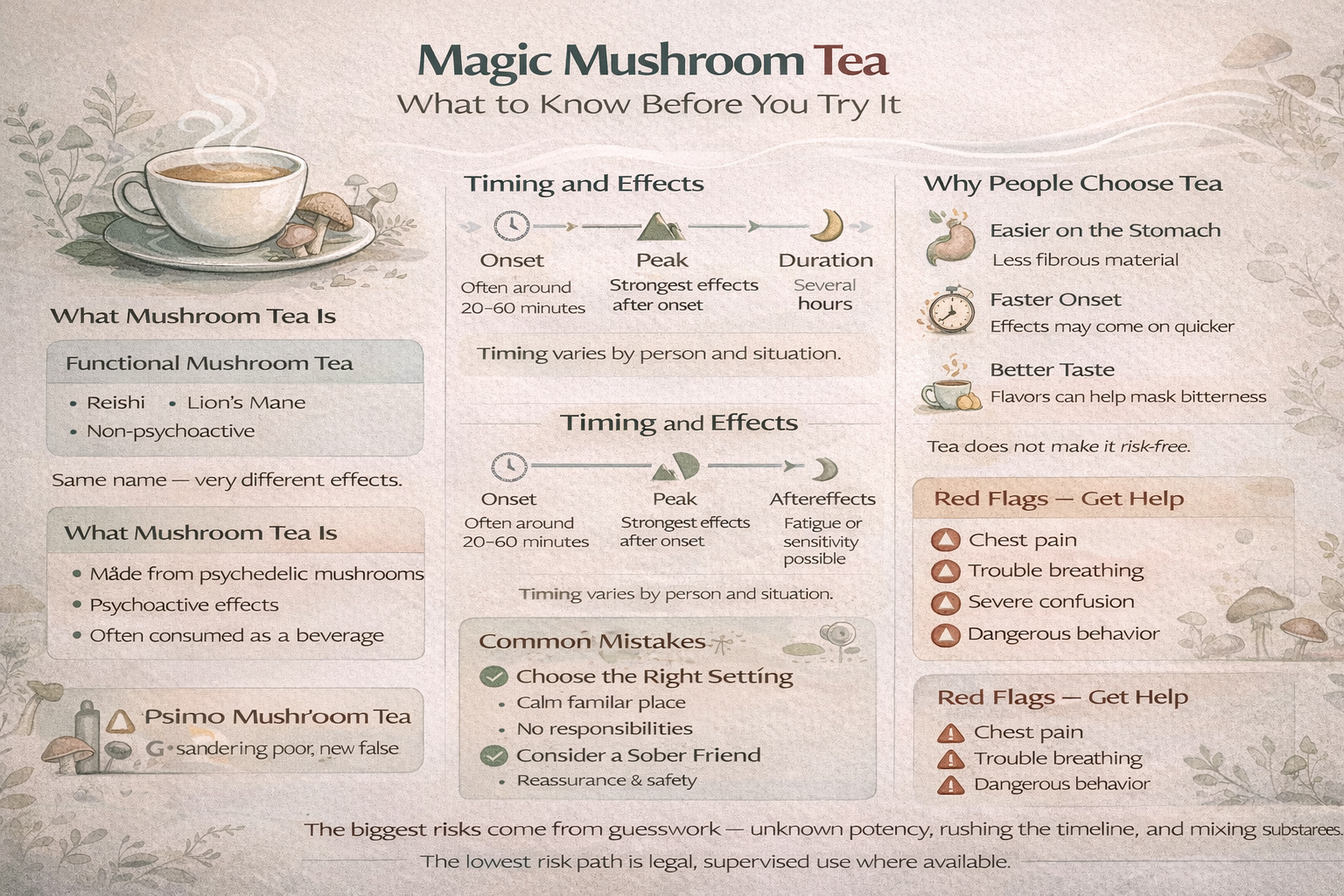
• Functional mushroom drinks made from reishi, lion’s mane, cordyceps, and similar non-psychoactive mushrooms.
• Psilocybin mushroom tea made from psychedelic mushrooms.
The second type is the one people mean when they say “magic mushroom tea.” The idea is to separate the active compounds into a hot beverage so you’re not eating as much fibrous mushroom material. Many users often report faster onset compared to eating whole pieces and sometimes less stomach discomfort. That said, “tea” doesn’t guarantee a smoother session; it’s still psilocybin.
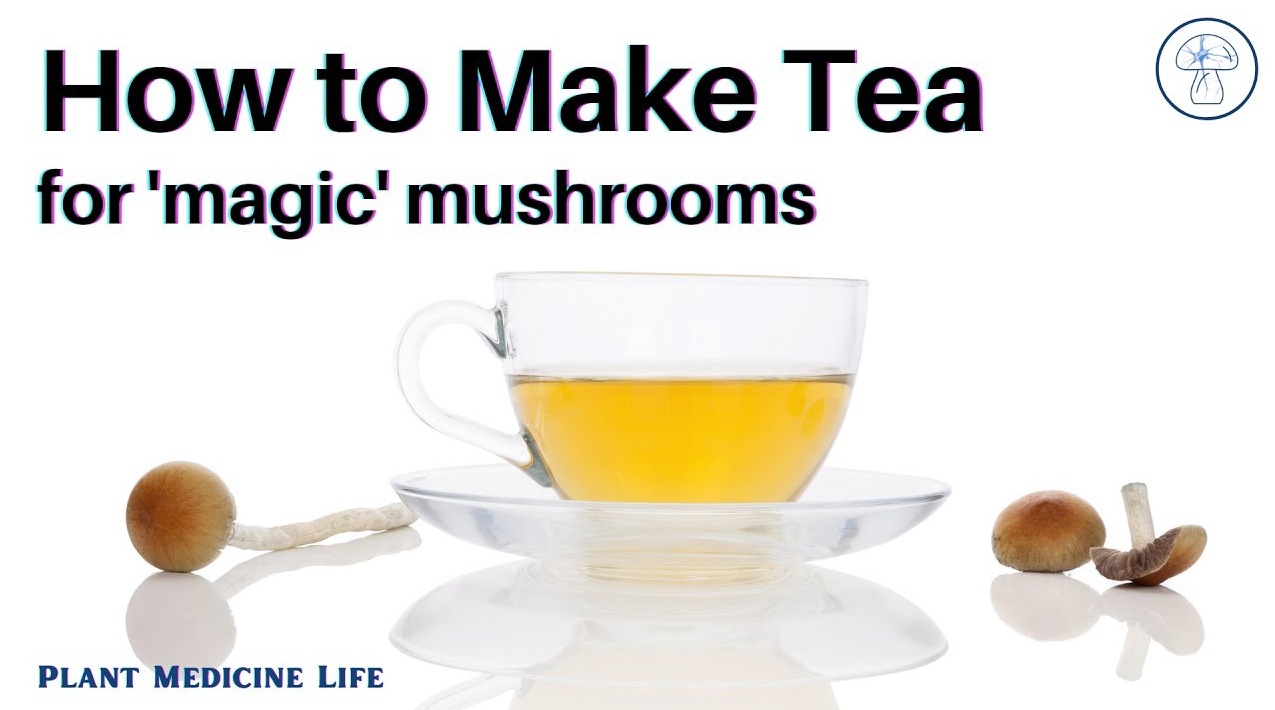
Timing: when effects start and how long they can last
Most people feel the first effects within about half an hour, sometimes sooner, sometimes later. Duration commonly lands around several hours, with a gradual taper. Your body, the amount used, whether you’ve eaten, and your mindset can shift the timeline a lot. If you’re trying to plan your day, the safest assumption is that you’ll be unavailable for the rest of the day, with aftereffects like fatigue or sensitivity that can linger into the evening.
Why people choose tea instead of eating dried mushrooms
It can be easier on the stomach
A big reason is nausea. Dried mushrooms can be tough to digest. Tea may reduce the amount of solid material that hits your gut, which can help some people.
It can feel faster
Many report that tea hits quicker. That can be convenient, but it can also feel intense if you’re not prepared, because the ramp-up can be steeper.
Flavor can be more manageable
Honestly, mushrooms taste like mushrooms. Tea lets people use other flavors to cover the funk, though it won’t erase it completely.
The common mistakes people make with “shroom tea”
Even without a recipe, it’s useful to know what typically goes wrong.
Mistake 1: Treating puff-count math like dosing math
With vapes, people talk about puffs. With mushrooms, potency varies wildly by species, grow, storage, and age. Two batches that look similar can feel totally different. Assuming a fixed “one mug equals X” is how people get surprised.
Mistake 2: Using boiling-hot liquid and blaming “the tea” when it feels weak
High heat and long exposure can degrade compounds in many botanicals. People often make tea too hot, too long, then say it “didn’t work,” and take more. Stacking more on top is a common path to an overwhelming trip. If someone is in a jurisdiction where use is legal, they should follow reputable, harm-reduction guidance rather than guessing.
Mistake 3: Chugging fast, then getting anxious when it comes on strong
Tea is easy to drink quickly. A faster come-up can feel like losing control, which feeds panic. Slow, mindful pacing is safer than slamming a cup and waiting for the floor to move.
Mistake 4: Not straining well, then thinking tea “doesn’t count”
People sometimes leave a lot of material in the drink, swallow it, and then forget they effectively ate mushrooms too. That can increase nausea and intensity.
Mistake 5: Mixing with alcohol, weed, or stimulants
Some people try to “take the edge off” with alcohol or combine it with cannabis to boost visuals. For many, that increases confusion and anxiety. Stimulants can raise heart rate and jitteriness. If your goal is a predictable session, mixing is the opposite.
Mistake 6: Using random online “detox” advice instead of basic planning
Threads are full of risky suggestions, from extreme water loading to questionable products. Overhydration can be dangerous. The smarter move is planning: don’t schedule responsibilities, avoid driving, and keep a calm space.
Practical safer-use tips (not a how-to)
This isn’t permission or encouragement; it’s harm reduction.
Choose the right day and place
Pick a low-stress day, with no work, no driving, and no important calls. A familiar, comfortable setting is better than a crowded public scene.
Have a sober, trusted sitter if you’re unsure
A friend who stays sober can help with reassurance, hydration reminders, and preventing risky decisions.
Start low and wait
Taking more too soon is one of the top causes of a bad time. Waiting is boring, but it’s safer than stacking.
Keep hydration simple
Sip water normally. Avoid extreme strategies. Eat light if you’re prone to nausea.
Protect sleep and the next day
Have food ready, dim lighting, and a plan to rest. Many people feel emotionally tender afterward; give yourself space.
Storage, freshness, and why “old shrooms” can surprise you
How mushrooms are stored affects potency. Heat, moisture, and sunlight can damage active compounds and increase the chance of mold. If something smells musty, looks fuzzy, or feels damp, don’t use it. Older material can be uneven: one piece feels mild, another hits harder than expected. That unevenness is one reason people get caught off guard.
Medication and health interactions people forget about
If you take psychiatric meds, don’t assume mushrooms are “natural so it’s fine.” Some antidepressants can blunt effects, and mixing psychedelics with certain substances can raise risk. If you have heart issues, uncontrolled anxiety, or you’re pregnant or breastfeeding, skipping psychedelics is the safer call. If you’re considering any use for mental health, the safest route is medical screening and supervised care.
When to stop and seek help
If someone has chest pain, trouble breathing, severe confusion, suicidal thoughts, or dangerous behavior, that’s a medical situation. If panic is intense, grounding helps: slow breathing, a quiet room, and reassurance that it will pass. If symptoms don’t settle or safety is at risk, call emergency services.
Functional mushroom tea is a different category
If your goal is daily wellness, consider non-psychoactive mushroom blends like reishi, lion’s mane, or cordyceps. Many brands market them for stress support or focus, and they’re typically caffeine-free. Just be clear about labels: functional mushroom powders are not psilocybin.
FAQs
Is tea stronger than eating mushrooms?
Not necessarily. It can feel faster, which feels stronger, but the total effect depends on potency and amount.
Why does magic mushroom tea sometimes feel gentler?
Often because less solid material is consumed, which may reduce stomach discomfort for some.
Can you “fix” a bad batch by changing the tea?
Changing prep won’t fix unknown potency or contamination. Source and testing matter more than tricks.
What’s the safest option if you’re curious?
The safest route is legal, supervised use in a clinical or facilitated setting where available.
Final thoughts
People like mushroom tea because it can be easier to drink than to chew, and it may be gentler on the stomach. But the biggest risks usually come from guesswork: unknown potency, rushing the timeline, and mixing substances. If you want the lowest-risk path, keep it legal, keep it simple, and treat it with respect.